

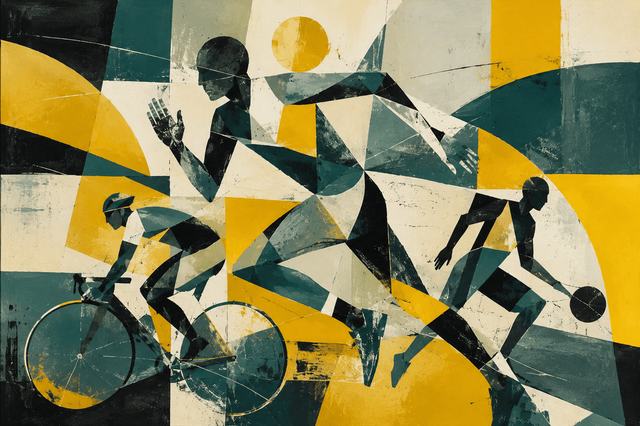
A textile records its own making. Every thread holds the tension of the hand that pulled it; every dye-bath keeps the hour it was mixed. Nothing in a woven surface can be undone without leaving evidence — which makes cloth an unusually honest material to think with.
Time made material
Haddad treats the loom as a kind of clock. The work is slow because the meaning is in the slowness: a quiet argument against images made to be consumed in a second, made by a process that cannot be hurried without showing it.
Her dye logs are kept like lab notebooks — bath temperature, immersion time, the weather that week. Read together they amount to a diary of attention.


Why it matters now
In a field addicted to speed, the dyed surface insists on duration. It asks to be read the way it was made: patiently, and in person, because a photograph of a textile is a photograph of a texture and nothing more.
The claim
Material choices in Haddad's practice are cognitive choices. The cloth is not a support for an idea; the handling of it is the idea.
The objection
One could call this romanticism about craft. The answer is in the dye logs: the decisions are documented, repeatable and argued for. Nothing mystical survives contact with a notebook.
Every thread remembers the hand that pulled it.