


Lena Mara paints the instant before a thing becomes itself — the point at which a field of colour might still resolve into a figure, or refuse to. Stand in front of one of these paintings for long enough and you notice you have started doing the work the picture withholds: completing an edge, naming a shape, then watching it come apart again.
Holding the edge
What it takes, technically, to stop a picture from resolving.
The threshold is not a subject Mara depicts; it is a state she sustains. Oil and wax go on in thin, patient layers and come back off with a blade, and the picture is finished at the moment it can carry several readings without collapsing into any of them. A centimetre more and it would be a landscape. A centimetre less and it would be nothing.
This is harder than it sounds, and it is not the same as vagueness. Vagueness is a picture that has not decided. Mara's paintings have decided very precisely — they have decided to stay open.
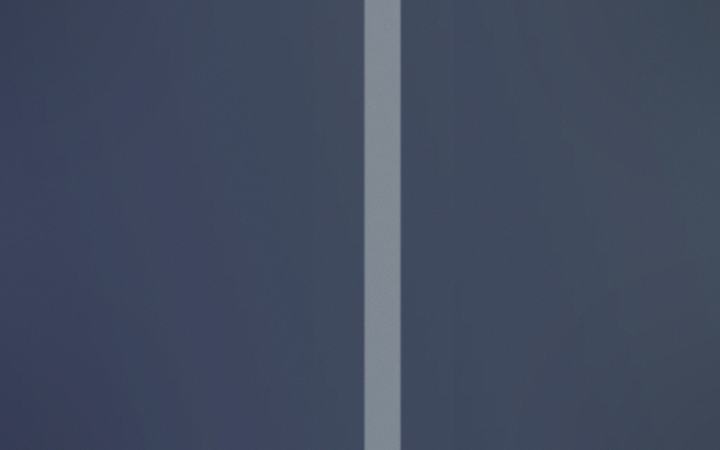
A painting that resolves too quickly has nowhere left to go.
The ethics of the slow look
Why an unfinished-looking picture is a demand rather than an evasion.
There is an ethics folded into this patience. To refuse the quick image is to ask a viewer to stay — and asking someone to stay is, in a room designed for circulation, a genuinely awkward request. Most contemporary painting is built to survive being photographed. Mara's is built to survive being looked at twice.
The awkwardness is productive. A picture that cannot be consumed at a glance forces the room to slow down around it, and the room, obligingly, does.

I stop when the painting can still be two things. One more session and it would only be one.
What stays with you afterwards is not an image but a posture — the particular attentiveness the paintings train you into, and which you carry, briefly, out onto the street.
Further reading
- Painting at the Limit of the Recognisable Marion Lefèvre, Éditions du Seuil, 2019
- The Scraped Surface: Technique and Refusal Journal of Contemporary Painting, 2023